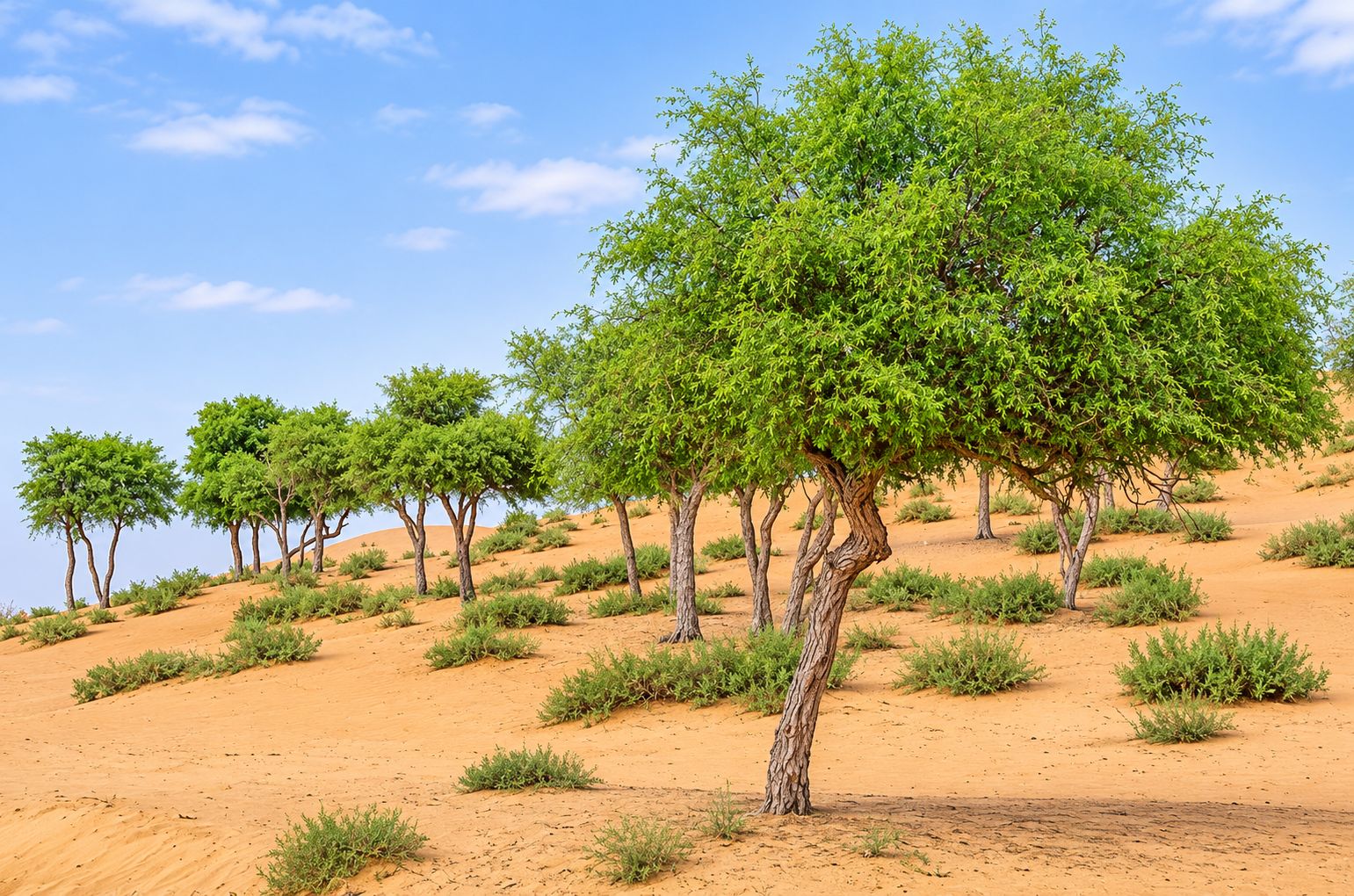


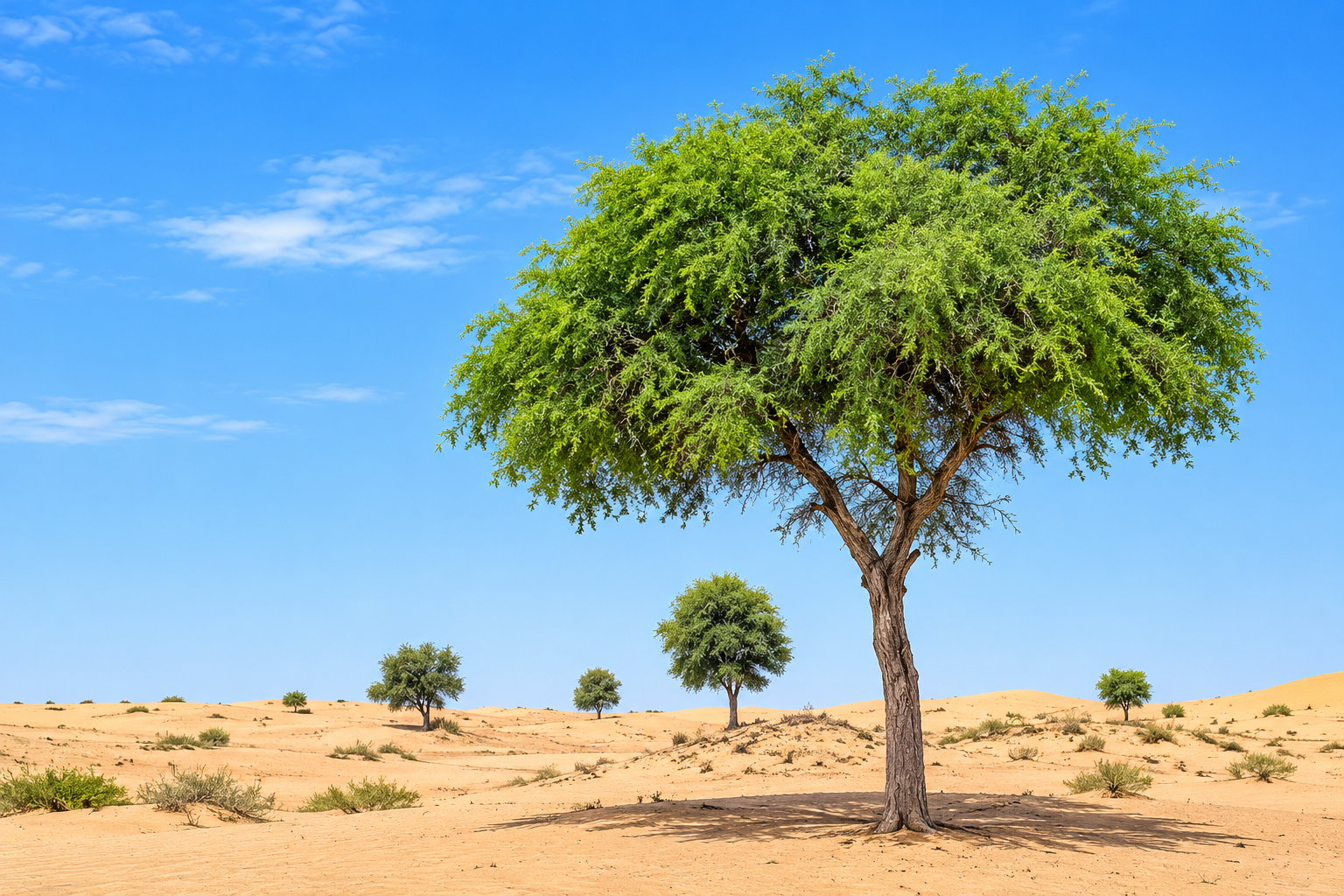
The Ghaf Tree (Prosopis cineraria) is one of the most remarkable native trees found in the United Arab Emirates. Known for its ability to survive harsh desert conditions, it represents strength, resilience and the importance of nature. Moreover, it has played a significant role in the country’s cultural and environmental heritage.
In 2008, the Ghaf Tree was officially declared the National Tree of the UAE. Since then, it has been recognised as a symbol of peace, tolerance and sustainability. Furthermore, its environmental importance has made it one of the most treasured trees in the region.
1. The Historical and Cultural Importance of the Ghaf Tree
For generations, the Ghaf Tree has been closely connected to traditional Emirati life. In the past, its wide branches were used to provide shade and shelter in the desert. Additionally, its leaves and seed pods were traditionally used as food for livestock.
The tree was also valued for its strong wood and medicinal uses in traditional practices. As a result, it became an essential part of desert communities.
Today, the Ghaf Tree is widely respected as a symbol of the UAE’s heritage. Its importance is celebrated through conservation initiatives and environmental awareness programmes.
2. Physical Characteristics of the Ghaf Tree
The Ghaf is a medium-sized evergreen tree that can grow up to approximately 10 metres tall under suitable conditions. It is recognised by its broad canopy, strong trunk and small green leaves.
Its branches spread widely, creating a natural umbrella-like shape. Therefore, excellent shade is provided beneath its canopy.
In addition, its deep and extensive root system helps it access moisture from deeper soil layers. Because of this adaptation, the tree can survive in dry environments where many other plants struggle to grow.
3. How Does the Ghaf Tree Survive in Desert Conditions?
The Ghaf Tree is specially adapted to hot and dry environments. Although desert temperatures can become extremely high, the tree is capable of surviving with limited water.
Its deep roots allow underground moisture to be accessed. Meanwhile, its small leaves help reduce water loss through transpiration.
Furthermore, the tree can grow in different soil conditions, including sandy and dry soils. Consequently, it is considered an excellent native species for desert environments and sustainable landscaping.
4. Flowers, Leaves and Fruits of the Ghaf Tree
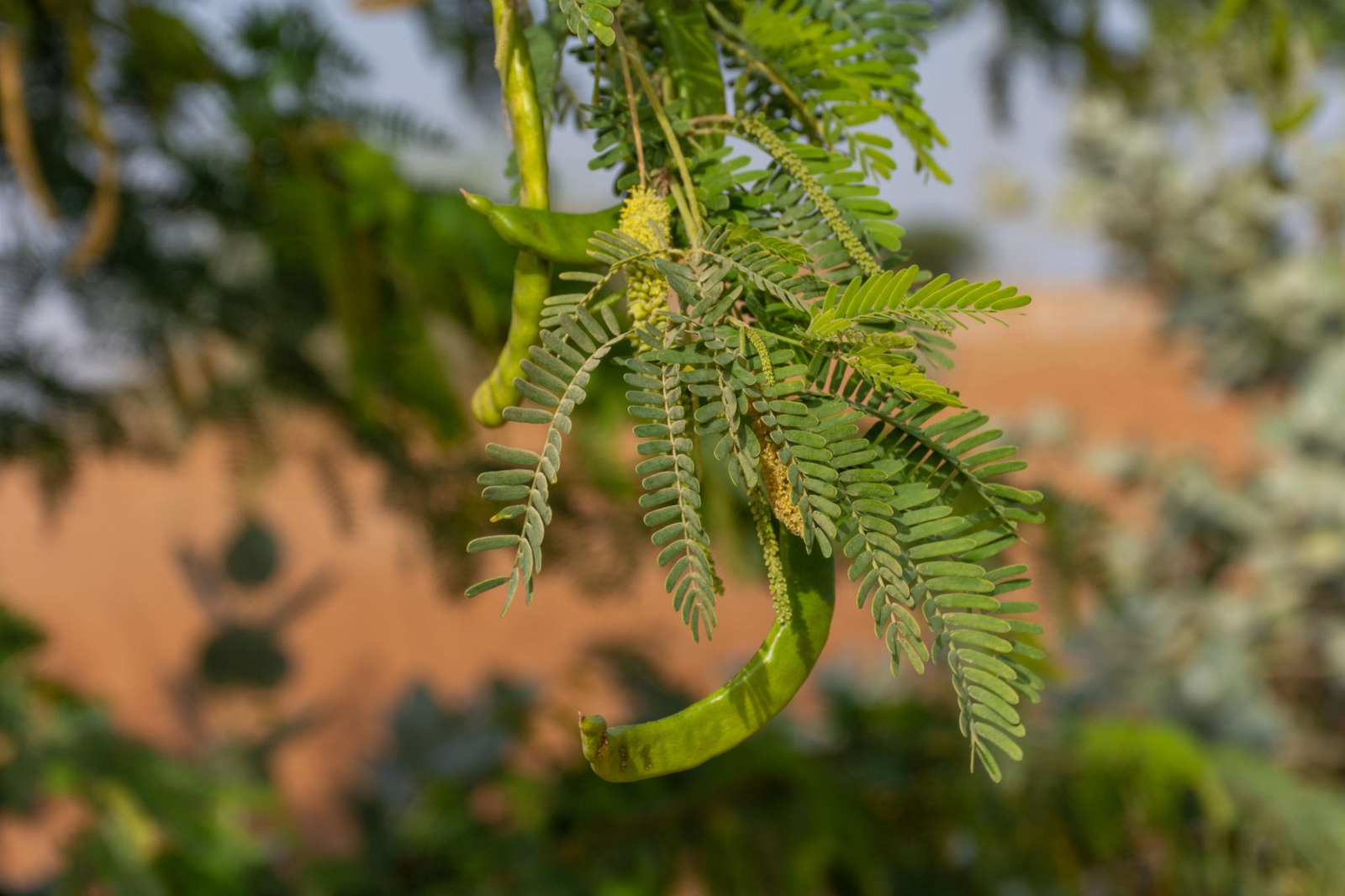
The Ghaf Tree produces small yellowish-green flowers that grow in slender clusters. These flowers are usually seen during favourable growing conditions.
After flowering, long and narrow seed pods are produced. As they mature, the pods gradually turn yellowish or brown.
The leaves are small and green, while the branches create a dense canopy. In addition, the flowers, leaves and pods provide valuable food resources for different desert animals and insects.
5. Environmental Benefits of the Ghaf Tree
The Ghaf Tree plays an important role in maintaining the ecological balance of desert environments. Not only does it provide shade, but it also supports biodiversity.
Some of its major environmental benefits are explained below.
Natural Shade: A wide canopy is formed by its branches, providing protection from the intense desert sun.
Soil Conservation: Soil is held together by its extensive root system. As a result, soil erosion can be reduced.
Wildlife Protection: Birds, insects and other desert animals are supported by the tree. Moreover, suitable nesting and shelter areas are provided.
Improved Soil Health: As a leguminous plant, it can contribute to soil fertility through its relationship with nitrogen-fixing bacteria.
Biodiversity Support: Different organisms are attracted to its flowers, leaves and seed pods. Therefore, it contributes to a healthier desert ecosystem.
Climate Adaptability: The tree is naturally adapted to high temperatures and limited rainfall. Consequently, it is valued for sustainable landscaping in arid regions.
6. Traditional Uses of the Ghaf Tree
Historically, several parts of the Ghaf Tree were used by desert communities. Its importance was not limited to providing shade.
- Leaves and pods were traditionally used as animal fodder.
- Its branches provided natural shelter.
- Its strong wood was used for various traditional purposes.
- Different parts were used in traditional medicinal practices.
- The tree offered valuable resources to communities living in desert regions.
Today, these traditional uses are remembered as an important part of the UAE’s cultural heritage.
7. Ghaf Tree in Sustainable Landscaping
Nowadays, sustainable landscaping has become increasingly important in the UAE. Therefore, native trees such as the Ghaf are being valued for their environmental benefits.
Due to its drought tolerance, the Ghaf Tree can be used in suitable outdoor landscaping projects. For example, it can be planted in parks, gardens, roadsides and open green spaces.
Furthermore, irrigation requirements can be reduced once the tree has become established. At the same time, natural shade and wildlife habitats can be created.
By choosing native trees, greener and more environmentally responsible landscapes can be developed.
8. How to Grow and Care for a Ghaf Tree
Although the Ghaf Tree is naturally drought-resistant, proper care is required during its early growth stages.
Sunlight: A location with full sunlight should be selected for healthy growth.
Watering: Young trees should be watered regularly while their roots become established. However, excessive watering should be avoided.
Soil: Well-drained sandy soil is preferred. Nevertheless, the tree can tolerate several challenging soil conditions.
Pruning: Dead and damaged branches should be removed when necessary. In addition, excessive pruning should be avoided.
Space: Enough space should be provided for its wide canopy and extensive root system.
Protection: Young trees should be protected from grazing animals and physical damage.
Once established, the Ghaf Tree requires relatively little maintenance compared with many other landscape trees.
9. Interesting Facts About the Ghaf Tree
The Ghaf Tree has several interesting characteristics that make it special.
- It is the National Tree of the UAE.
- Its scientific name is Prosopis cineraria.
- It was officially declared the National Tree in 2008.
- It is highly adapted to hot and dry desert conditions.
- Its deep root system helps it access underground moisture.
- Its leaves and pods provide food for animals.
- It supports local biodiversity and desert wildlife.
- It was chosen as a symbol of tolerance during the UAE’s Year of Tolerance in 2019.
10. Why Should the Ghaf Tree Be Protected?
Despite its ability to survive in harsh environments, the Ghaf Tree faces several challenges. Habitat loss, urban development and overgrazing can affect its natural populations.
Therefore, conservation efforts are essential for protecting this valuable native species.
Existing trees should be preserved, while suitable planting programmes should be encouraged. In addition, public awareness about native plants and sustainable landscaping should be increased.
Through these efforts, the natural heritage of the UAE can be protected for future generations.
Frequently Asked Questions About the Ghaf Tree
1. What is the scientific name of the Ghaf Tree?
The scientific name of the Ghaf Tree is Prosopis cineraria. It belongs to the legume family.
2. Why is the Ghaf Tree important in the UAE?
The Ghaf Tree is considered an important cultural and environmental symbol. It was declared the National Tree of the UAE in 2008.
3. Can the Ghaf Tree survive extreme heat?
Yes. It is naturally adapted to high temperatures, dry conditions and limited rainfall.
4. How tall can a Ghaf Tree grow?
Under suitable growing conditions, it can reach approximately 10 metres in height.
5. Does the Ghaf Tree require frequent watering?
Young trees require regular watering during establishment. However, mature trees are highly drought-tolerant and require less frequent irrigation.
6. What are the main benefits of the Ghaf Tree?
It provides shade, supports wildlife, helps stabilise soil and contributes to biodiversity.
7. Is the Ghaf Tree suitable for landscaping?
Yes. It is suitable for many outdoor landscaping projects in arid regions because of its drought tolerance and natural beauty.
Conclusion: Growing a Greener Future with Native Trees
The Ghaf Tree is much more than a beautiful desert tree. It represents the strength, heritage and environmental commitment of the UAE.
Its ability to survive extreme conditions, support wildlife and protect desert ecosystems makes it truly special. Therefore, protecting native trees should be considered an important step towards a sustainable future.
At Daffodils, we believe that every tree plays a valuable role in creating a greener environment. By appreciating nature and encouraging sustainable planting, a healthier future can be created for generations to come.
Let’s protect nature, preserve our green heritage and grow a greener tomorrow!